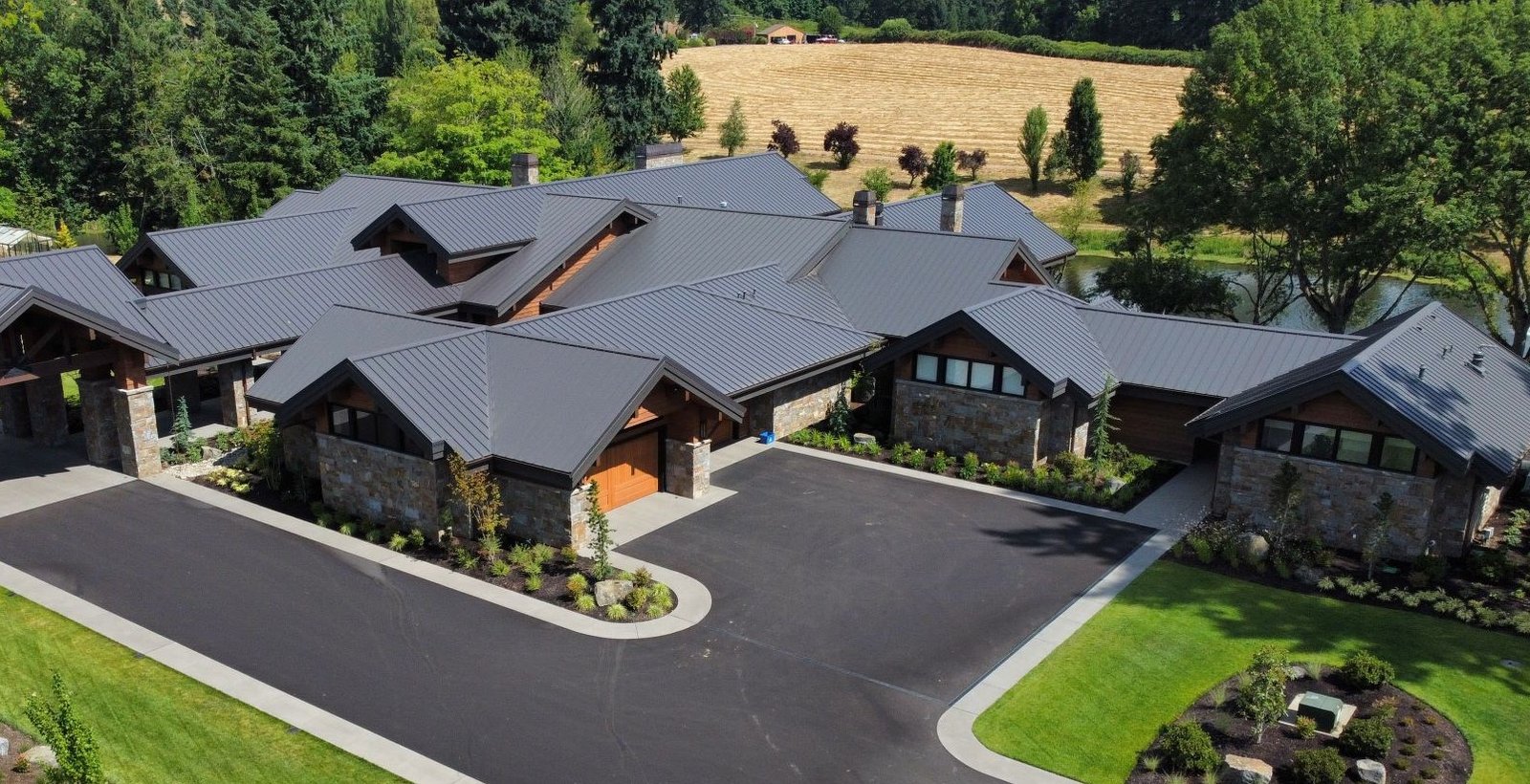
Metal roofing is increasingly being specified on multi-family and light commercial projects in Austin and surrounding areas — and for good reason. When properly designed and installed, standing seam metal roofs are known for long service life, stable performance, and good resistance to harsh weather, which matters for owners, architects, and property managers looking at long-term operating costs.
Most design teams think of standing seam when they think of a “metal roof.” These systems use continuous panels formed from metal coils, cut to length on-site for a precise fit and clean seams. In the U.S., coil manufacturers offer different metal thicknesses (commonly 24–26 gauge) and paint/color systems, often chosen to meet architectural design standards, project specs, and warranty requirements.
To a casual observer, metal roofs can look similar, but there are real differences in:
Panel gauge (thickness)
Paint system and coating quality
Clip/fastener design and spacing
How seams and edges are detailed at eaves, ridges, valleys, and walls
Those details affect durability, color stability, movement, and overall performance over time.
At Llagua Roofing LLC, we present multiple standing seam options and clearly explain what separates one system from another. Our goal is to give architects, builders, and building owners factual, product-based information so they can make informed decisions that align with design intent, budget, and risk profile—not just aesthetics.