
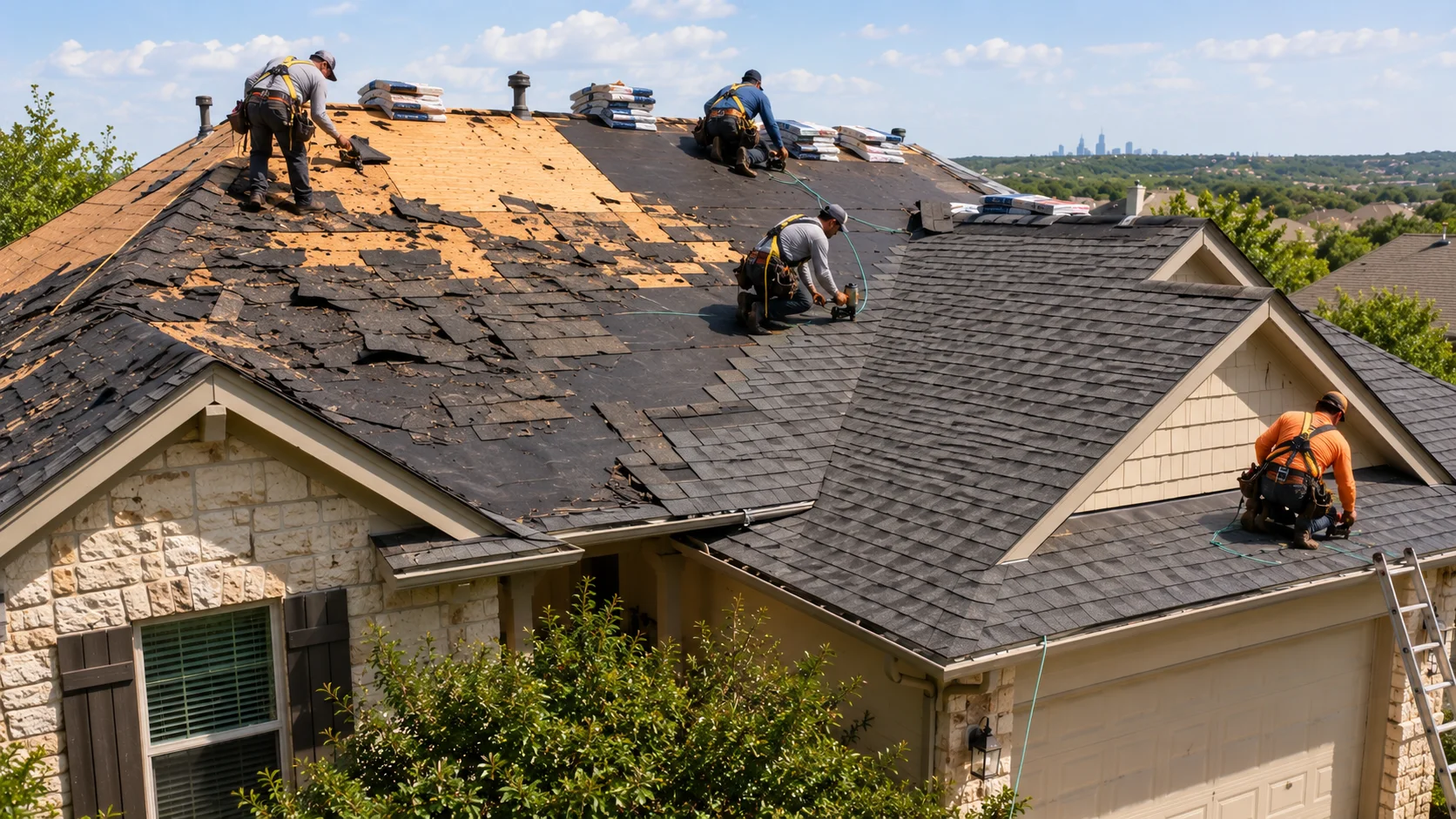
Your roof protects your home from heat, rain, wind, hail, and other weather conditions. Over time, asphalt shingles can lose their protective qualities, making it important to recognize the signs that your asphalt shingle roof needs to be replaced before minor problems become expensive damage. Knowing when to consider Asphalt Shingle Roof Replacement can help protect your home and prevent avoidable repairs.
This guide explains seven common asphalt shingle roof replacement signs, including curling shingles, granule loss, leaks, storm damage, roof sagging, and an aging roof. You will also learn how to evaluate asphalt shingle roof repair vs replacement, how Austin weather can affect shingles, and when a professional roof inspection may be appropriate.
How Do You Know When an Asphalt Shingle Roof Needs to Be Replaced?
Several warning signs can indicate that an asphalt shingle roof is approaching the end of its useful life. Visible deterioration, frequent leaks, widespread damaged shingles, excessive granule loss, and an aging roof are all reasons to have the roof evaluated. A single damaged shingle does not always mean you need a new roof, but multiple problems across the roof surface can indicate that replacement is more practical than continued repairs.
The condition of the entire roofing system matters when deciding when to replace an asphalt shingle roof. A professional inspection can assess the shingles, roof flashing, underlayment, roof decking, and areas around vents and penetrations. For homeowners considering Roof Replacement Austin TX, an experienced roofing contractor can determine whether the damage is localized or whether the roof has reached the point where a complete replacement is recommended.
7 Signs Your Asphalt Shingle Roof Needs Replacement
1. Your Asphalt Shingles Are Curling, Cracking, or Buckling
Curling, cracking, or buckling shingles are among the most visible signs of roof deterioration. Shingles may curl at the edges, develop cracks, or appear wavy and distorted as they age. These problems can reduce the shingles’ ability to shed water and protect the underlying roofing materials. If these conditions are widespread rather than limited to one small area, they may indicate that your roof is nearing the end of its service life.
2. You Are Finding Excessive Granules in Your Gutters
Excessive granules in your gutters can also be a warning sign. Asphalt shingles are coated with protective granules that help shield them from sunlight and weather exposure. As shingles deteriorate, these granules can loosen and collect in gutters and downspouts. You may also notice bald or visibly worn areas on the shingles. Significant granule loss can weaken the roof’s weather resistance and should be evaluated as part of a professional roof inspection.
3. Shingles Are Missing or Damaged After a Storm
Missing or damaged shingles after a storm should not be ignored, particularly in areas exposed to strong winds and hail. Missing shingles leave portions of the roof vulnerable to water intrusion, while hail damage can create cracks, bruising, or other defects that are difficult to identify from the ground. If storm damage affects a large portion of the roof, replacing individual shingles may not provide a long-term solution.
4. Your Roof Is Leaking or You See Water Stains Inside Your Home
Roof leaks or water stains on the ceiling are another important warning sign. Water entering through damaged shingles, roof flashing, or other roofing components can eventually affect insulation, drywall, wood, and roof decking. Even if the leak appears small, recurring water intrusion can lead to more extensive water damage. Homeowners should address leaks promptly rather than waiting for visible interior damage to become severe.
5. Your Roof Is Sagging or Has Uneven Areas
Roof sagging or uneven areas can indicate a more serious roofing problem. A sagging roofline may be associated with moisture damage, deteriorated roof decking, structural problems, or prolonged water intrusion. Unlike minor shingle damage, sagging should receive prompt professional attention because the issue may extend beyond the visible roofing surface.
6. Your Asphalt Shingle Roof Is Nearing the End of Its Lifespan
An aging asphalt shingle roof may eventually require replacement even when it does not have an obvious major leak. Roof lifespan varies according to shingle quality, installation, ventilation, maintenance, weather exposure, and other factors. If an old asphalt shingle roof is showing several signs of deterioration at the same time, a professional evaluation can help determine whether continued repairs make financial sense.
7. You Keep Paying for Roof Repairs in the Same Areas
Frequent repairs in the same areas can be a sign that replacement deserves consideration. Individual repairs can be effective when damage is isolated, and the rest of the roof remains in good condition. However, repeatedly repairing leaks, damaged shingles, or deteriorated areas can become costly over time. When roofing problems continue to return across an aging roof, a complete Asphalt Roof Replacement may provide a more dependable long-term solution.
Should You Repair or Replace an Asphalt Shingle Roof?
The decision between Asphalt Shingle Roof Repair vs replacement depends on the roof’s age, condition, extent of damage, and repair history. A relatively new roof with isolated damage may only require targeted repairs. Replacing a few missing or damaged shingles, repairing flashing, or correcting a small leak can often extend the useful life of a roof when the surrounding materials remain in good condition.
Replacement becomes more appropriate when deterioration is widespread, or the roof has multiple recurring problems. Extensive granule loss, widespread curling or cracking, repeated leaks, significant storm damage, and an aging roof can all point toward replacement. A professional roof inspection from an experienced asphalt roofing contractor Austin TX can help you understand the condition of your roof before you commit to either option.
How Does Austin Weather Affect Asphalt Shingle Roofs?
Austin homes experience intense sunlight, high temperatures, heavy rain, strong winds, and occasional hail. Repeated exposure to these conditions can accelerate wear on asphalt shingles. Heat and ultraviolet exposure can contribute to aging, while severe storms may cause missing shingles, cracks, granule loss, or damage around roof flashing and other vulnerable areas.
Regular roof maintenance and inspections can help identify weather-related damage before it becomes a larger problem. Homeowners looking for Asphalt Shingle Roofing Austin TX should pay particular attention after major storms and periods of severe weather. Identifying damage early can provide more options for repair and help prevent water from reaching the roof decking and interior of the home.
What Happens If You Delay Asphalt Shingle Roof Replacement?
Delaying necessary asphalt shingle roof replacement can allow a manageable roofing problem to become more extensive. Damaged shingles can permit water to reach the underlayment and roof decking, while unresolved leaks can eventually affect insulation, ceilings, walls, and other interior components. What begins as a roofing repair may therefore develop into a much larger home repair project.
An aging or severely deteriorated roof can also become more vulnerable during future storms. Waiting until a roof experiences major failure may reduce the opportunity to address problems on your own schedule. If you have noticed repeated leaks, widespread damaged shingles, or other signs of roof deterioration, arranging a professional inspection can help you understand the next appropriate step.
How Can a Roofing Contractor Tell If You Need a New Roof?
A professional roofing contractor evaluates more than the shingles that are visible from the ground. During an inspection, the contractor can look for damaged or missing shingles, granule loss, deteriorated flashing, signs of water intrusion, ventilation concerns, and areas where the roofing system may have weakened. The roof’s age and previous repair history can also help determine whether repair or replacement is the better option.
For homeowners considering Residential Roof Replacement, an inspection provides useful information before making a major investment. Llagua Roofing LLC can evaluate the condition of an asphalt shingle roof and help homeowners understand whether repairs may be sufficient or whether a new roof should be considered. A professional assessment is especially valuable when the roof has experienced storm damage or has developed recurring problems.
Conclusion
Recognizing the signs your asphalt shingle roof needs to be replaced can help you address roofing problems before they lead to more extensive damage. Curling and cracked shingles, granule loss, missing shingles, leaks, sagging, an aging roof, and repeated repairs are all reasons to take a closer look at your roofing system. Not every problem requires a new roof, but widespread deterioration should not be ignored.
If you are unsure whether your Austin home needs repairs or asphalt shingle roof replacement, a professional roof inspection can provide a clearer answer. Llagua Roofing LLC can help homeowners evaluate their roofing needs and determine the most appropriate next step for their residential property. Addressing roofing concerns early can help protect your home and provide greater confidence in your roof’s long-term performance.
FAQs
How do I know if my asphalt shingle roof needs to be replaced?
Look for widespread curling, cracking, missing shingles, granule loss, recurring leaks, sagging, and significant storm damage. Roof age and repeated repair needs are also important factors.
How many years should an asphalt shingle roof last?
The lifespan varies based on shingle quality, installation, ventilation, maintenance, and weather exposure. A professional inspection can determine the roof’s current condition regardless of age.
Should I repair or replace my asphalt shingle roof?
A small, isolated problem may be repairable, while widespread deterioration, recurring leaks, or an aging roof may make replacement the better long-term choice.
Can damaged asphalt shingles be repaired instead of replaced?
Yes, isolated damage can often be repaired when the surrounding roof remains in good condition. Extensive damage may require a complete roof replacement.
Does hail damage mean I need a new roof?
Not necessarily. Hail can cause localized damage that may be repairable, but widespread or severe damage can justify replacement. A professional inspection can determine the extent of the problem.