
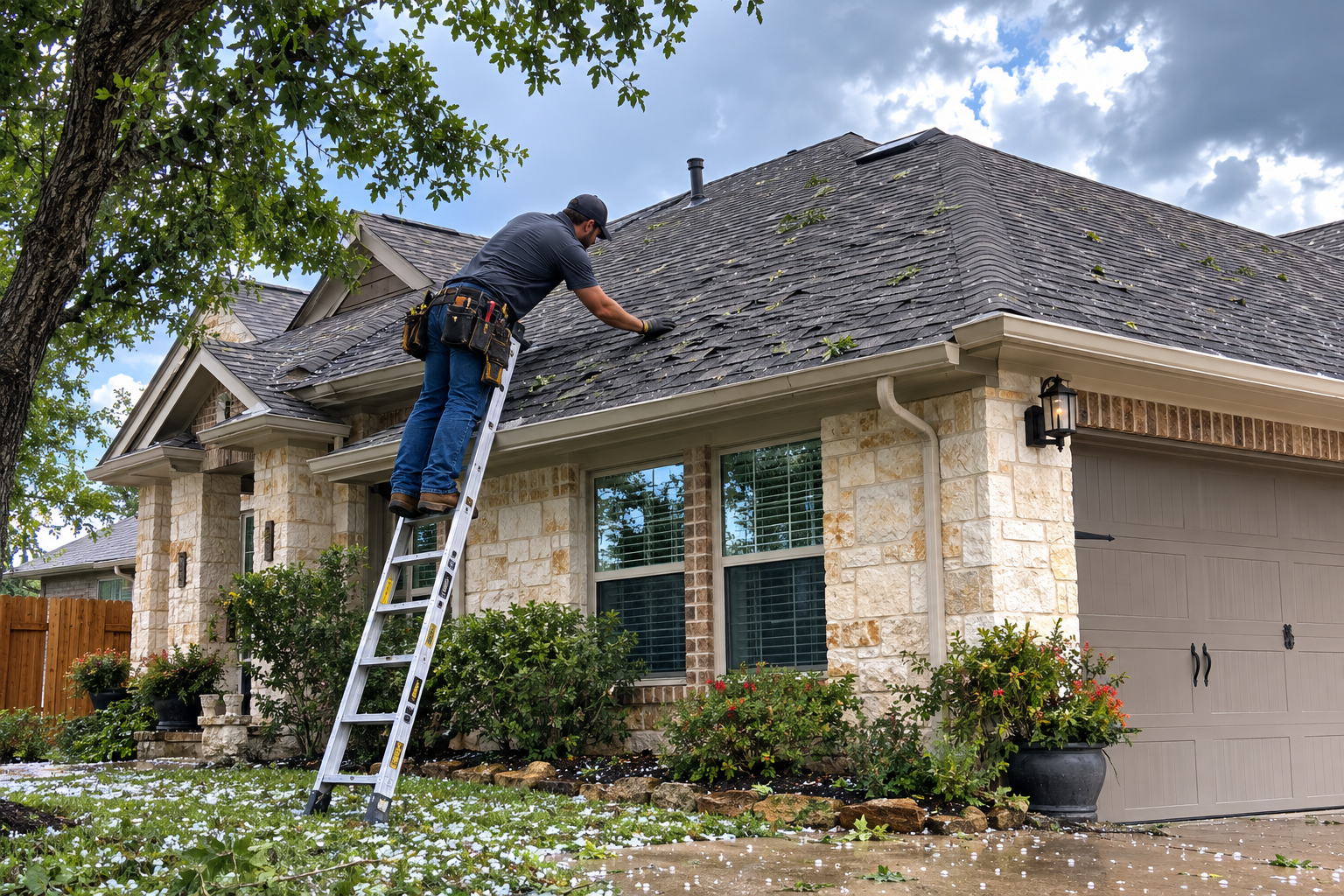
Severe weather can put a roof through conditions that ordinary sunny-day inspections never reveal. The August 27 storm activity around Austin brought hail and strong winds that could leave homeowners questioning whether their roofing system is still in good condition. Even when damage is not immediately visible from the ground, storm conditions can affect shingles, flashing, gutters, and other parts of a roofing system. Understanding how severe weather affects a roof can help homeowners recognize potential problems and take action before minor issues develop into more expensive repairs. For homeowners exploring Hail Resistant Roofing, understanding how these materials respond to hail and wind can also help them prepare for future severe weather.
For homeowners considering Hail Resistant Roofing, the goal is not to assume that a roof is completely protected from every storm. Instead, these roofing systems are designed to provide greater resistance to impact and help reduce the likelihood or severity of certain types of storm damage. The right materials, proper installation, routine maintenance, and timely inspections can all contribute to better roof performance. By understanding how hail-resistant systems work and what to look for after a storm, Austin homeowners can make more informed decisions about protecting their properties.
The Homeowner’s Guide to Hail-Resistant Roofing
A hail resistant roof is designed with materials and construction features intended to better withstand the impact of hail compared with some conventional roofing products. During a severe storm, hail can strike the same section of a roof repeatedly, potentially causing cracks, bruising, granule loss, or other forms of surface damage. Strong winds can make the situation worse by lifting shingles or driving debris against the roof. While stronger materials can improve resistance, no roofing system should be described as completely immune to severe weather. Hail size, wind speed, roof age, installation quality, and the condition of the existing materials can all influence the amount of damage a roof experiences.
Homeowners evaluating their roofing options should consider the complete system rather than focusing on one product feature. Hail resistant roofing materials can include impact-resistant shingles and other components designed to provide additional protection against severe weather. However, even high-quality materials need to be installed correctly to perform as intended. A professional roofer can evaluate the current condition of a roof, identify vulnerable areas, and explain whether upgrading the roofing system could make sense for the property. This type of assessment is particularly useful after a significant storm or when an older roof is approaching the end of its expected service life.
Does Home Insurance Typically Cover Hail Damage to Roofs?
Homeowners insurance may cover certain types of hail-related roof damage, but coverage depends on the individual policy and the circumstances surrounding the loss. Policies can differ in terms of deductibles, exclusions, roof-age provisions, maintenance requirements, and covered causes of damage. Because of these differences, homeowners should review their policy and speak with their insurance provider before assuming that a particular repair or replacement will be covered. A professional roofing inspection can also help document the condition of the roof and identify areas that may have been affected by a recent storm.
It is important to keep expectations realistic when dealing with an Insurance Claim. An insurer may consider factors such as the roof’s age, pre-existing deterioration, maintenance history, and the nature of the storm damage when reviewing a claim. Homeowners should document visible damage when it is safe to do so, keep relevant records, and avoid making major repairs before understanding the claim process unless immediate action is necessary to prevent further property damage. A qualified roofing contractor can provide useful information about the condition of the roof, while the insurance company ultimately determines coverage according to the policy.
What’s the Best Type of Roof for Hail?
There is no single roofing material that can guarantee protection against every hailstorm. However, some products are specifically designed and tested to provide greater impact resistance than standard roofing materials. Homeowners comparing hail resistant shingles may find products manufactured with stronger construction and enhanced impact resistance. When selecting a roof, it is also important to consider the property’s design, local weather conditions, installation requirements, expected service life, and overall budget. A roof should be evaluated as a complete system rather than choosing a product based on one specification alone.
For Austin homeowners, Hail Resistant Roofing can be worth considering when replacing an aging roof or choosing materials after significant storm damage. Stronger shingles may provide an added layer of protection during future hail events, but their effectiveness also depends on proper installation and the condition of the rest of the roofing system. Underlayment, flashing, ventilation, decking, and other components all play important roles in roof performance. Working with an experienced roofing professional can help homeowners compare appropriate options and select materials that balance durability, performance, appearance, and cost.
How Does Hail Damage Affect Asphalt Shingles?
Asphalt shingles are commonly used on residential properties, but they can be affected by repeated hail impacts. Depending on the severity of the storm, hail may remove protective granules from the shingle surface, create bruised areas, crack the material, or damage vulnerable edges. Granule loss can expose portions of the shingle to the elements and may contribute to premature deterioration over time. Some damage is easy to recognize, while other impact marks can be subtle and difficult for an untrained homeowner to identify without a closer inspection.
The condition of the shingles before the storm also matters. Older shingles may already have weakened areas, making them more vulnerable to additional weather exposure. Hail resistant roof shingles are designed to provide greater impact resistance than some conventional products, but they should not be treated as completely damage-proof. After a major storm, homeowners should look for visible signs such as missing shingles, damaged edges, excessive granules around gutters or downspouts, and other changes to the roof surface. If anything appears unusual, a professional inspection can help determine whether the roof experienced storm-related damage.
How to Inspect a Roof for Storm Damage?
A post-storm roof inspection should begin with safety. Homeowners can examine the property from ground level and look for obvious signs such as missing shingles, loose roofing materials, damaged gutters, fallen branches, or debris around the home. They should avoid climbing onto a wet or damaged roof because unstable surfaces and hidden structural problems can create serious fall hazards. Storm damage is not always limited to what can be seen from the ground, so a professional assessment may be necessary to understand the roof’s actual condition.
A qualified roofer can examine areas that homeowners may not be able to safely access and look for signs of impact, wind displacement, damaged flashing, compromised roofing components, or other storm-related issues. If damage is found, the inspection can help determine whether a targeted repair or more extensive work is appropriate. For homeowners interested in Hail Resistant Roofing, a post-storm inspection can also be an opportunity to discuss whether upgrading the roofing system would provide greater protection in the future. Addressing problems promptly can help reduce the chance of water intrusion and prevent small issues from becoming larger roofing concerns.
How Can Hail Resistant Roofing Help During Future Austin Storms?
One of the biggest advantages of Hail Resistant Roofing is the additional impact resistance it can provide when a property is exposed to severe weather. Traditional roofing materials can be vulnerable to repeated hail impacts, particularly when they are older or already showing signs of deterioration. Impact-resistant products are designed with greater durability in mind, which can make them an option for homeowners who want to improve their roof’s ability to withstand future weather events. The exact level of protection depends on the selected product, installation, storm intensity, and other factors affecting the roofing system.
Choosing a more durable roof should be viewed as part of a broader storm-preparation strategy rather than a guarantee against damage. Hail Resistant Roofing can provide added impact resistance, but keeping the roof properly maintained, addressing damaged areas promptly, keeping gutters clear, and arranging professional inspections when necessary can all support long-term performance. For Austin homeowners who have recently experienced severe weather, reviewing the condition of the existing roof can be a practical first step. If replacement or an upgrade is appropriate, discussing impact-resistant options with a professional can help homeowners choose a system suited to their property and local weather conditions.
FAQs
Can hail damage a roof without causing a leak?
Yes. Hail can bruise shingles, remove granules, or create cracks without causing an immediate leak. Hidden damage can worsen over time, making a professional inspection worthwhile after severe weather.
Is hail-resistant roofing completely hail-proof?
No. Hail-resistant roofing is designed to provide greater impact resistance, but severe hail can still damage roofing materials. Storm intensity, roof condition, installation, and material type all affect performance.
What are signs of hail damage on asphalt shingles?
Common signs include missing granules, exposed areas, bruising, cracks, damaged edges, or unusual marks on shingles. Some damage is difficult to identify from the ground and may require professional inspection.
Should I inspect my roof after a severe Austin storm?
Yes. A professional inspection can identify damage that may not be visible from ground level and help determine whether repairs or replacement are needed. Avoid climbing onto the roof yourself after severe weather.
Are hail-resistant shingles worth considering in Austin?
They can be worth considering for homeowners who want greater impact resistance. Their suitability depends on the roof, budget, material, installation, and local weather conditions, so a professional assessment can help with the decision.
Conclusion
The August 27 storm is a reminder that Austin homeowners should take severe weather seriously, particularly when hail and strong winds are involved. Understanding how hail affects roofing materials and the benefits of Hail Resistant Roofing can help homeowners make better decisions about inspections, repairs, and future roof upgrades.
A professional evaluation can reveal damage that may not be obvious from the ground and help determine the right next step. Whether a roof needs a minor repair, replacement, or Hail Resistant Roofing for stronger future protection, addressing storm-related concerns promptly can help protect the home and reduce the risk of larger problems.