
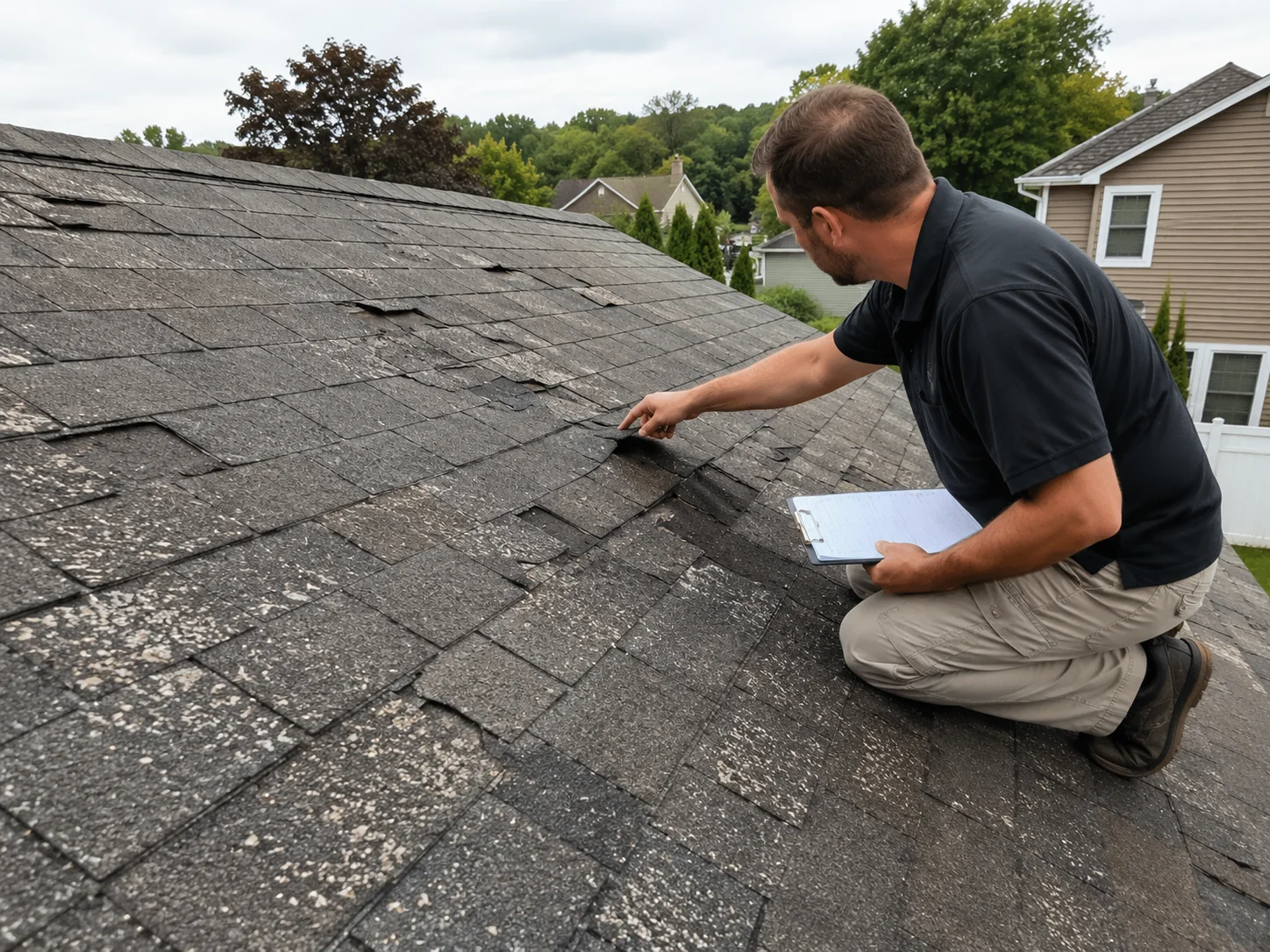
Storms can leave behind roof problems that are difficult to identify from the ground. Hail vs Wind Damage is an important distinction because hail and wind affect roofing materials in different ways. Recognizing the signs can help homeowners document roof storm damage more accurately and understand what information may be useful when discussing a property damage claim.
A roof inspection after a storm can reveal damage that is not immediately obvious, including lifted shingles, broken shingle seals, granule loss, or impact marks. This guide explains how to tell hail damage from wind damage, what patterns to look for, how documentation can support a roof damage insurance claim, and when a professional inspection may be appropriate.
How Can You Tell Hail Damage From Wind Damage?
The easiest way to distinguish hail from wind damage is to look at the type, shape, and pattern of the damage. Wind commonly affects shingles by lifting, tearing, creasing, or removing them, particularly where roofing materials are exposed to strong airflow. Hail, by contrast, usually creates localized impact damage such as dents, bruising, and areas of granule loss.
The distinction is not always obvious, especially when a severe storm produces both hail and high winds. A careful roof damage assessment considers the condition of individual shingles, roof slopes, flashing, gutters, vents, and other exterior components. Because damage can occur in several places at once, homeowners should avoid relying on one isolated mark to determine the cause.
Identifying Wind vs. Hail Damage
When identifying Wind Damage vs Hail Damage, look for patterns rather than focusing only on whether a shingle appears damaged. Wind damage often follows exposed areas, edges, ridges, and locations where shingles can catch moving air. Missing sections, lifted tabs, and visible creases are common clues that the roofing material experienced wind-related stress.
Hail damage generally appears as individual impact points distributed across exposed roof areas. You may also find related damage on gutters, vents, siding, or other outdoor surfaces. The condition of the shingle granules and the presence of soft or bruised areas can provide additional clues. However, a professional inspection is useful when the cause cannot be confidently identified from a ground-level view.
What Does Wind Damage Look Like on a Roof?
Missing Shingles
One of the clearest signs of wind damage on a roof is a missing shingle or missing section of a shingle. Strong winds can tear tabs away or completely remove roofing materials, leaving exposed areas underneath. Missing shingles may be especially noticeable along roof edges, ridges, and other areas that experience greater wind exposure.
Wind can also damage shingles without removing them completely. A tab may remain attached while its seal has failed, creating a loose or vulnerable section. If you see roofing material that appears displaced after a storm, photograph it from a safe location and consider arranging a professional storm damage roof inspection.
Creased Shingles and Dark Horizontal Lines
Creased shingles are another potential indicator of wind-related damage. When a shingle is bent or folded by wind, it can develop a visible line across its surface. A dark horizontal crease may indicate that the material has been physically stressed rather than struck by a small, concentrated object.
These creases can be easy to miss when viewed from the ground. They may become more apparent when the roof is inspected closely. Homeowners should avoid walking on a damaged roof themselves, particularly when shingles are loose or the roof surface may be unstable. A qualified roofing contractor can assess the affected areas more safely and systematically.
Lifted or Loose Shingle Edges
Wind can lift shingle edges and break the seals that normally help hold individual tabs in position. Loose shingles may appear raised, curled, or displaced, particularly near roof corners, ridges, and exposed edges. This type of damage can indicate that wind has affected the roof even when no shingles are completely missing.
Broken shingle seals can also make a roof more vulnerable to subsequent weather. That is why loose or lifted shingles should not simply be dismissed because the roof still appears mostly intact. Documenting the affected area and having the condition assessed can help establish the extent of the wind damage roof problem.
What Does Hail Damage Look Like on a Roof?
Random Dents and Impact Marks
Typical signs of Hail Damage on a roof can include random dents or impact marks across asphalt shingles. Hailstones strike the surface with concentrated force, potentially creating round or irregular indentations. Similar impact marks may appear on soft-metal components such as gutters, vents, or flashing.
Hail impact marks are not necessarily arranged in a neat pattern. Depending on the storm, hail may affect different portions of the roof and other exposed property surfaces. Random hail dents on several roof slopes can therefore provide useful evidence when assessing possible hail damage, particularly when considered alongside other storm-related damage.
Granule Loss and Exposed Shingle Mat
Shingle granule loss is another condition that may be associated with hail impact. Granules protect the surface of asphalt shingles, and a sufficiently strong impact can dislodge them. An affected area may appear different from the surrounding shingle and can expose darker material underneath.
Granule loss should be evaluated in context because shingles can lose granules for reasons other than a single hailstorm, including age and normal weathering. A professional roof inspection can help distinguish localized storm-related damage from general deterioration. This broader assessment is important when documenting a potential hail damage roof claim.
Scattered Hail Damage Patterns
Hail damage can occur in scattered patterns across roof slopes exposed to the storm. Unlike wind damage, which may concentrate around exposed edges or loose shingle sections, hail can leave individual impact areas across broader portions of the roof.
Inspectors may also look at nearby exterior surfaces for corresponding evidence, such as damaged gutters or roof vents. The overall pattern matters because it can help establish whether the property experienced storm-related impacts. Looking at the entire roof rather than one questionable mark provides a more reliable picture of the damage.
Wind Damage Signs vs. Hail Damage Signs
The clearest difference between the two is the physical pattern they can leave behind. Wind tends to lift, tear, crease, or remove roofing materials, while hail tends to create localized impact damage. The table below provides a simple starting point for distinguishing common indicators.
| Wind Damage | Hail Damage |
|---|---|
| Missing shingles | Random dents |
| Creased shingles | Circular or localized impact marks |
| Lifted edges | Granule loss |
| Broken shingle seals | Soft or bruised areas |
| Damage along exposed edges | Scattered impact patterns |
These signs are useful indicators, not a substitute for a complete inspection. A roof may have both types of damage after the same storm, and some conditions can have multiple possible causes. Looking at the roof slope, surrounding components, damage pattern, and condition of the materials together provides a more meaningful assessment.
Why the Difference Matters for Your Insurance Claim
The cause of damage can matter when an insurance claim is being evaluated because insurance adjusters may separate repair items according to the specific cause of loss. If wind tears are incorrectly described as hail bruises, the documentation may not accurately represent what happened to the property. Clear descriptions and photographs can therefore help communicate the actual condition of the roof.
For a roofing Insurance Claim, accurate documentation should correspond with the observed damage rather than assumptions about the storm. Properly identifying each type of damage can help create a clearer repair scope for the property. Coverage decisions ultimately depend on the applicable policy and insurer, so homeowners should review their policy requirements and communicate with their insurance provider about the claim process.
How to Document Hail and Wind Roof Damage for an Insurance Claim
Start by photographing visible damage from safe locations and capture both close-up details and wider images showing where the damage occurs. Document missing, lifted, or creased shingles as well as possible hail impact marks, granule loss, damaged gutters, roof vents, siding, and other exterior components. If known, record the date of the storm and keep relevant inspection reports and repair estimates.
Good insurance documentation should tell a consistent story about the property’s condition. Avoid making unnecessary permanent repairs before documenting the damage when it is reasonably safe to wait, while addressing temporary measures needed to prevent additional damage. Keep copies of photographs, reports, estimates, and communications related to the property damage claim.
Can a Roofing Contractor Tell Whether Damage Was Caused by Hail or Wind?
A qualified roofing contractor can inspect the roof for physical indicators that may help determine whether damage is consistent with hail, wind, or another cause. The assessment can include looking for missing or displaced shingles, creases, broken seals, impact marks, granule loss, and patterns across different roof slopes.
The surrounding components can also provide useful context. Gutters, vents, flashing, siding, and other exposed surfaces may show corresponding storm impacts. A professional roof inspection is particularly useful when damage is subtle or difficult to see from ground level, although the final determination of insurance coverage remains a matter for the insurer and applicable policy.
What Should You Do After Finding Hail or Wind Damage?
After a storm, begin with a visual inspection from the ground and avoid climbing onto the roof if you are not trained and equipped to do so. Photograph visible conditions, note when the storm occurred, and look for obvious missing shingles, lifted sections, dents, or other exterior damage. If you notice a potential problem, arranging a professional inspection can provide a more detailed assessment.
You should also review your insurance policy and understand its documentation and claim requirements. Keep inspection reports, photographs, estimates, and related records together. If temporary repairs are necessary to prevent additional property damage, document the condition beforehand when possible and retain receipts or records associated with the work.
When Should You Schedule a Professional Roof Inspection?
A professional inspection is worth considering after a severe storm, particularly when you notice missing shingles, loose roofing materials, dents, granule loss, or other unusual changes. Some roof storm damage cannot be identified easily from the ground, and apparently minor damage may warrant closer evaluation before it becomes more extensive.
An inspection can also be useful when you are uncertain whether the observed condition is storm-related or simply normal aging. A roofing professional can evaluate the roof’s materials, individual roof slopes, visible damage patterns, and related exterior components. This information can help you make a more informed decision about repairs and insurance documentation.
Hail vs. Wind Damage: Which One Is Worse for a Roof?
Neither type of damage is automatically worse in every situation. The severity of Hail vs Wind Damage depends on factors such as storm intensity, roofing material, roof age, installation condition, and the location and extent of the affected areas. A few localized impacts may have a different significance than widespread structural or material damage.
Wind can remove or displace shingles, while hail can bruise roofing materials and cause localized surface damage. A storm can also produce both conditions at the same time. Rather than judging severity solely by the cause, homeowners should focus on the actual condition of the roof and obtain a proper assessment when damage is suspected.
Protect Your Roof After a Severe Storm
Taking prompt, informed action after severe weather can help you understand what happened to your property before deciding on repairs. Start with safe visual documentation, preserve relevant records, and consider a professional storm damage roof inspection when damage is suspected or cannot be clearly identified from the ground.
Llagua Roofing LLC can be a relevant resource for homeowners who need professional roofing assistance after storm-related damage. When contacting a roofing contractor, ask for a clear explanation of the observed conditions and the recommended repair scope. For related information, consider internally linking this article to your Roof Repair Services, roof inspection services, or storm damage roofing services pages if those pages are available on the website.
Conclusion
Knowing the difference between hail and wind damage helps homeowners recognize important roof problems and document them more accurately. Wind commonly causes missing, lifted, loose, or creased shingles, while hail can produce random dents, bruising, and granule loss. Looking at the overall pattern across the roof and exterior components provides more useful information than relying on one damaged spot.
Hail vs Wind Damage can also matter when preparing documentation for a roof damage insurance claim because the cause of loss can affect how damage is evaluated and itemized. If your roof has visible storm damage or you are unsure what caused a problem, consider contacting Llagua Roofing LLC for professional roofing assistance and a closer assessment of the property’s condition.
Frequently Asked Questions About Hail vs. Wind Damage
The following questions address common concerns homeowners have when inspecting a roof after severe weather. Because storm damage and insurance coverage can vary by property and policy, these answers focus on identifying physical damage and documenting it accurately rather than promising a particular claim outcome.
Understanding the difference between impact damage and wind-related displacement can make it easier to communicate what you observe. When the cause or extent of damage is unclear, a professional inspection can provide additional information before repair decisions are made.
How can I tell if my roof has hail or wind damage?
Wind damage commonly includes missing, lifted, loose, or creased shingles, while hail can leave dents, bruising, and localized granule loss. Because some damage can have multiple causes, a professional inspection is recommended when the evidence is unclear.
What are the most common signs of wind damage to shingles?
Common indicators include missing shingles, lifted edges, loose tabs, broken shingle seals, and visible creases. Damage may be more noticeable around exposed roof edges, ridges, and corners where wind can place greater stress on roofing materials.
What does hail damage look like on asphalt shingles?
Hail damage may appear as random dents, localized bruising, or areas where protective granules have been displaced. The marks can occur across different roof slopes and may be accompanied by impact damage to gutters, vents, flashing, or other exterior surfaces.
Does hail damage always cause visible dents?
Not necessarily. Some storm-related damage may be subtle or difficult to see from ground level. Granule loss or changes in the condition of roofing materials may require a closer inspection. A professional assessment can help identify conditions that are not obvious during a basic visual check.
Can hail and wind damage happen during the same storm?
Yes. A single severe storm can produce both hail and strong winds, meaning a roof may show different types of damage at the same time. For an insurance claim, documenting each observed condition accurately can help create a clearer record of the property’s storm-related damage.