
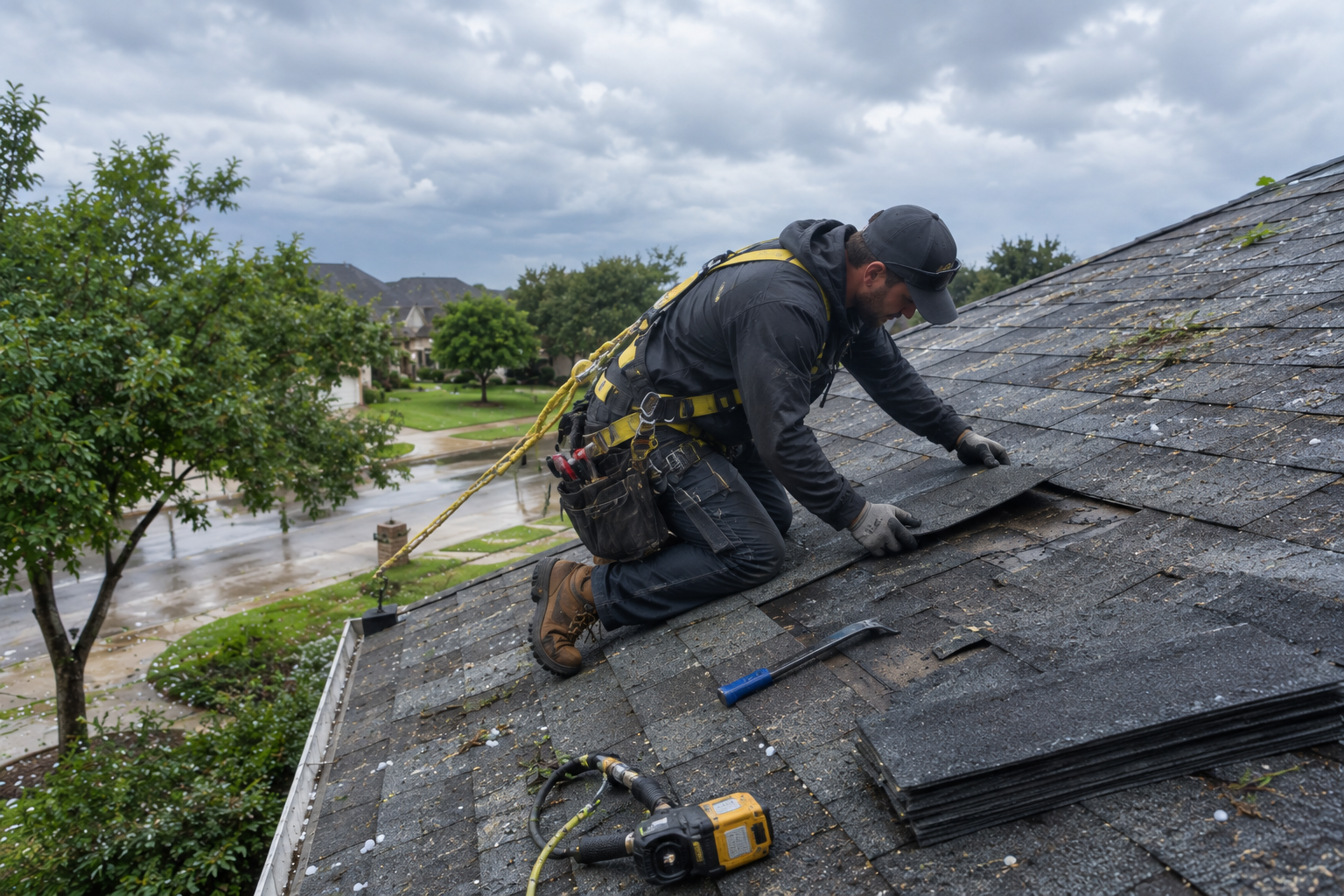
Hail can leave an Austin roof looking perfectly normal from the ground while causing damage that may become more serious over time. Shingles can lose protective granules, develop cracks, or suffer impact damage that is difficult to notice without a closer inspection. After a severe storm, homeowners should not assume that the absence of an immediate leak means the roof is undamaged. Checking the roof promptly can help identify problems before moisture enters the roofing system.
For homeowners considering Roof Repair Austin services after a hailstorm, the first step is understanding what to look for and when professional help may be necessary. A proper inspection can help determine whether the roof has minor damage that can be repaired or more widespread problems that may require replacement. Acting early can also make it easier to document storm-related damage and address vulnerable areas before another storm arrives.
How Soon Should You Repair Hail Damage?
Hail damage should be evaluated as soon as reasonably possible after a major storm. Even when there is no visible leak, damaged shingles may allow water to reach the layers beneath the roofing surface during future rainfall. Small cracks, loosened shingles, exposed areas, or missing granules can become larger problems when repeatedly exposed to Austin’s heat, rain, and additional severe weather. Prompt Roof Damage Repair can help prevent a relatively limited problem from developing into more extensive roofing damage.
Homeowners should also avoid waiting simply because the roof appears fine from the ground. Hail impacts can be subtle, and some damage may only become obvious after several days or during the next heavy rain. Scheduling an inspection soon after a storm gives a roofing professional an opportunity to document the condition of the roof, identify vulnerable areas, and explain which repairs may be appropriate. If temporary protection is needed, addressing those areas quickly can help reduce the chance of further damage.
Why a Professional Roof Inspection Matters After Hail?
A professional roof inspection matters because hail does not always leave obvious visual damage. A trained roofer can examine shingles, flashing, vents, roof edges, gutters, and other components that may have been affected by the storm. They can also look for granule loss, bruising, cracks, displaced materials, and other signs that may be difficult for a homeowner to recognize safely from the ground. Professional Residential Roof Repair assessments can therefore provide a clearer picture of the roof’s actual condition.
There is also an important safety consideration. Walking on a residential roof after a storm can be dangerous, especially when shingles are wet or loose and when other storm debris is present. A professional can inspect the roof using appropriate equipment and experience while also checking areas that homeowners may overlook. If damage is found, the inspection can help determine whether the appropriate response is a limited repair, temporary protection, or a more comprehensive roofing project.
Does Homeowners Insurance Cover Hail Damage?
Homeowners insurance may cover certain types of hail-related roof damage, but coverage depends on the individual policy, its exclusions, deductibles, and the circumstances surrounding the loss. Homeowners should review their policy and contact their insurance provider after discovering potential storm damage rather than assuming that every hail-related repair will automatically be covered. Keeping photographs, inspection information, and other documentation can also help create a clear record of what happened.
When significant storm damage is suspected, homeowners may benefit from having the roof professionally inspected before deciding how to proceed. A professional roofing contractor can document visible damage and provide information that may help the homeowner understand the condition of the roofing system. Insurance decisions ultimately depend on the policy and insurer, but good documentation can make it easier to explain what occurred and distinguish storm-related damage from normal aging or pre-existing issues.
Signs of Hail Damage You Can Spot From the Ground
Homeowners can look for several warning signs without climbing onto the roof. Missing or displaced shingles, excessive granules around downspouts, damaged gutters, dents in metal components, and visible debris can all justify a closer inspection. Homeowners may also notice unusual marks or areas of the roof that look different after a storm. These signs do not always prove hail damage, but they can indicate that Storm Damage Roof Repair should be considered.
The roof is not the only place worth checking after a hailstorm. Look at exterior vents, skylights, gutters, downspouts, siding, window screens, and other exposed surfaces for dents or impact marks. If similar damage appears across multiple parts of the property, it may provide additional reason to have the roofing system evaluated. Homeowners should avoid climbing onto the roof themselves, particularly immediately after a storm, because damaged or wet roofing materials can create a serious fall hazard.
Can Hail Damage Cause Roof Leaks?
Yes, hail damage can contribute to roof leaks, although a leak may not appear immediately after the storm. An impact can damage the surface of a shingle or weaken an area that later allows water to move beneath the roofing material. Heavy rainfall can then expose weaknesses that were not noticeable during the initial storm. This is one reason homeowners should not use the absence of a ceiling stain or dripping water as proof that the roof is completely unaffected.
If water does enter the home, homeowners should address the problem promptly. Stains on ceilings, damp attic insulation, wet decking, musty odors, or visible moisture can indicate that water has found a path through the roofing system. In those situations, Leaking Roof Repair may be necessary to limit interior and structural damage. If active water intrusion is occurring during or immediately after severe weather, homeowners should also consider whether Emergency Roof Repair is needed to protect the property until permanent repairs can be completed.
Should You Repair or Replace a Hail-Damaged Roof?
Whether a hail-damaged roof should be repaired or replaced depends on the severity, location, age, condition, and overall extent of the damage. A roof with isolated damage may only require targeted repairs if the surrounding materials remain in good condition. On the other hand, widespread damage across multiple roof sections may make replacement a more practical long-term solution. A professional evaluation can help homeowners understand the difference rather than making the decision based only on what is visible from the ground.
Roof age is another factor worth considering. If an older roofing system already has worn shingles, previous repairs, or other maintenance concerns, a major hail event may make replacement more reasonable than repeatedly repairing individual areas. For newer roofs with limited storm damage, targeted repairs may be sufficient. The goal of Roof Repair Austin should not simply be to fix the most obvious damaged spot, but to determine what solution provides appropriate protection for the entire roofing system.
What Should Austin Homeowners Do After a Hailstorm?
After hail passes, homeowners should first check the property from a safe location and look for obvious signs of storm impact. Damaged gutters, scattered shingles, visible debris, ceiling stains, and other unusual changes can indicate that the property needs closer attention. Taking clear photographs from the ground can also help document the condition of the home shortly after the storm. Homeowners should avoid climbing onto the roof because hidden damage and slippery surfaces can make post-storm inspections dangerous.
The next step is to arrange a professional evaluation if damage is suspected. A roofing contractor can inspect the roof more closely, identify areas affected by hail, and explain whether repairs or replacement may be appropriate. For homeowners searching for Roof Repair Austin after a severe storm, choosing a qualified local roofing professional can provide a practical way to evaluate the damage and determine the next steps without relying on guesswork.
The Next Step After Hail Damage
Hail damage is not always easy to identify from the ground, and waiting too long to address it can allow small roofing problems to become more serious. After a storm, homeowners should document any visible damage, check for signs of leaks, review their insurance coverage, and arrange a professional evaluation when needed. For homeowners looking for Roof Repair Austin, getting the roof assessed early can help determine whether targeted repairs are enough or whether more extensive work is necessary.
The right next step depends on the roof’s age, condition, and severity of the storm damage. A professional roofer can repair damaged shingles, address vulnerable areas, and explain whether the existing roof can continue providing reliable protection. Taking action after hail does not necessarily mean replacing the entire roof—it means understanding the damage and choosing the appropriate solution before the next storm puts additional stress on the roofing system.
FAQs
Can hail damage a roof without causing a leak?
Yes. Hail can bruise, crack, or weaken shingles without immediately allowing water inside. Damage may become a leak later when the roof is exposed to additional rain.
How quickly should hail damage be inspected?
It is best to have suspected hail damage evaluated as soon as reasonably possible. Early inspections can identify hidden problems and help prevent additional damage.
Can I inspect hail damage myself?
You can check the roof and property safely from the ground, but climbing onto the roof is risky. A professional can inspect difficult areas more safely and thoroughly.
Does homeowners insurance cover hail damage?
Many policies provide coverage for certain hail-related damage, but coverage varies. Homeowners should review their policy and contact their insurance provider for specific information.
Should I repair or replace my hail-damaged roof?
It depends on the roof’s age, condition, and extent of damage. Limited damage may be repairable, while widespread or severe damage may make replacement more practical.