
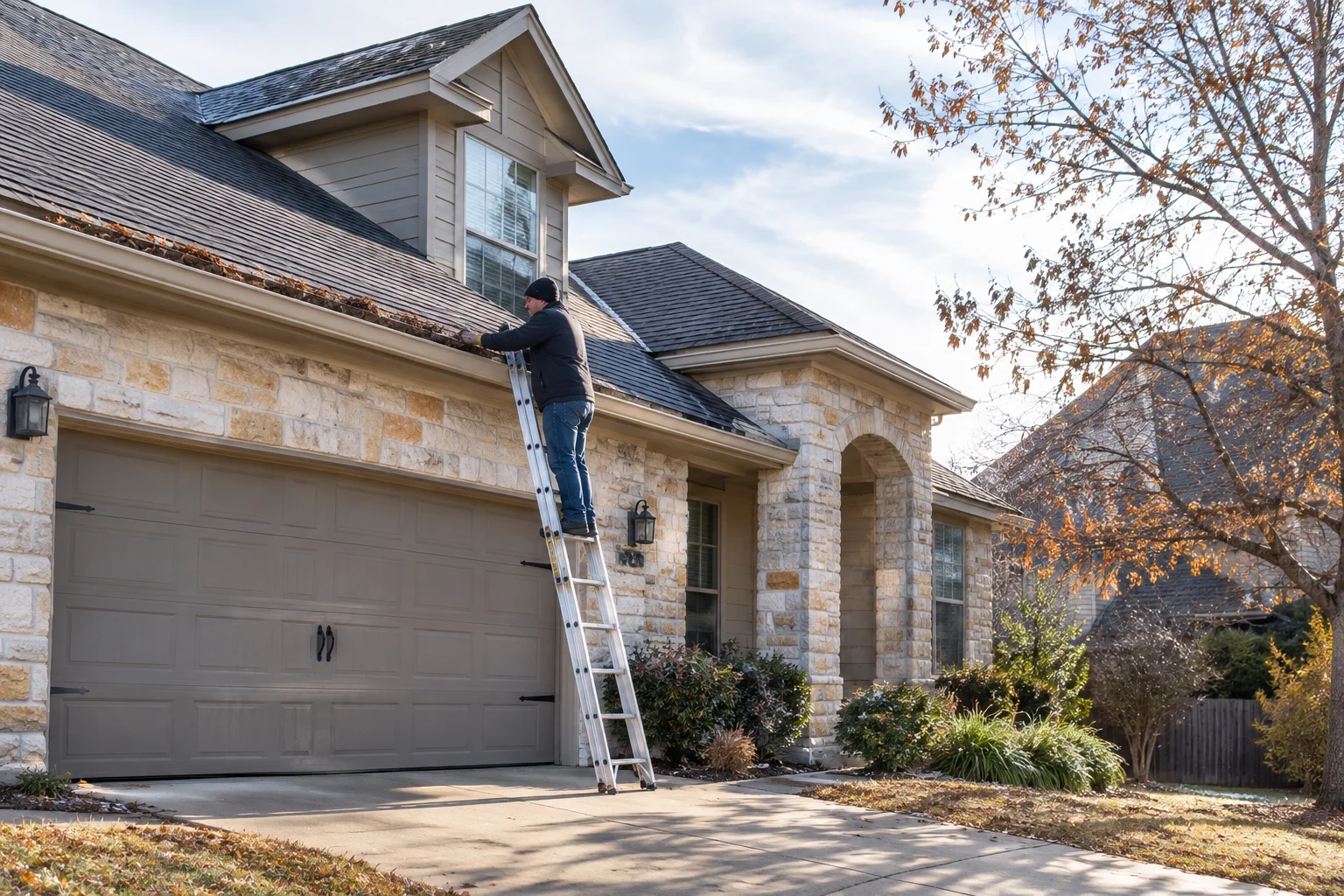
Austin winters don’t hit hard as Chicago winters but thats exactly why so many homeowners get caught off guard. A single hard freeze after weeks of weather can crack unsealed flashing burst a clogged downspout or send water pooling right where your shingles are already weak. Winterizing Your Roof And Gutters isn’t about bracing for months of snow. It’s about making sure your home can handle the temperature swings Central Texas throws at it every year. A few hours of prep now can save you thousands in emergency repairs later.
Why Winterizing Your Roof Matters Before First Freeze Hits?
Your roof works all year but freezing temperatures expose every small weakness its been hiding. Water that seeps into a crack expands when it freezes turning a minor issue into a major leak almost overnight. In Austin temperatures can swing 30-40 degrees in a day during winter and that constant expansion and contraction stresses shingles, seals and flashing more than people realize.
Waiting until a freeze warning is issued is too late to fix anything. Preventative care done in fall gives your roofing materials time to be inspected, repaired and sealed properly before they’re tested by ice. It’s the difference between a planned maintenance visit and a stressful emergency call.
How to Thoroughly Inspect Your Roof for Existing Damage?
Start with a visual walk-around of your property looking up at the roofline from every angle. Note any shingles that appear curled, cracked or discolored since these are early warning signs of water intrusion. Binoculars work fine for this. You don’t need to climb up unless something looks seriously off.
Pay attention to valleys, chimneys and skylights where debris and water tend to collect. These areas are more prone to leaks because multiple roofing sections meet there. If you spot granules collecting in your gutters or yard that’s a sign your shingles are aging. May need closer evaluation before winter weather arrives.
Clean Out Your Gutters Completely Before the Winter Season
Gutter Cleaning Before Winter isn’t optional. It’s one of the important steps in protecting your roofs edge. Leaves, twigs and dirt trap moisture against your fascia board. That trapped water can freeze, expand and pull gutters away from the house entirely. Clogged gutters are also one of the leading causes of ice dams later in the season.
Use a ladder and gloves to clear debris by hand then flush the system with a hose to confirm water flows freely toward the downspouts. If water pools along the gutter run you likely have a sagging section or improper pitch that needs adjusting before the first hard freeze hits.
Check Your Downspouts for Cold-Weather Drainage Now
Downspout drainage matters just as much as clean gutters. If downspouts empty close to your foundation freezing runoff can create ice buildup that damages both your landscaping and your homes base. Extensions should carry water least three to five feet away from the house.
Test each downspout by running water through it and watching where it exits. Slow drainage or backup near the top usually means a blockage down the line. Clearing this now prevents ice formation that can crack the downspout material during the weeks of winter.
Seal Roof Flashing and Vent Boots Against Water Leaks Now
Roof Flashing Repair is a task that prevents a big problem. Flashing sits around chimneys, skylights and roof-to-wall joints. Its one of the most common places leaks originate. Sun exposure and heat cycles in Texas cause sealant to dry out. Crack faster than in cooler climates.
Inspect vent boots too since the rubber collars around plumbing vents deteriorate over time. Often go unnoticed until water stains appear on a ceiling. Reapplying roofing sealant or replacing boots now is far cheaper than repairing interior water damage after a freeze forces water through a gap.
Trim Overhanging Tree Branches Near Your Roofline Edge Now
Overhanging branches do damage in winter than most homeowners expect. Ice accumulation adds significant weight and a branch that seemed harmless in summer can snap and puncture shingles once coated in ice. Branches rubbing against your roof surface also wear down granules over time.
Trim back anything within six feet of your roofline before winter weather sets in. This also reduces the amount of leaf litter that ends up in your gutters cutting down on clogged gutters and giving your roof better airflow and sun exposure to dry out after rain.
Check Your Attic Insulation and Ventilation This Winter
Attic Ventilation plays a role in roof health than most people realize. Poor airflow traps heat in your attic, which warms the roof deck unevenly and melts snow or frost faster in some spots than others. That uneven melting is one of the drivers behind ice dam formation.
Check that soffit vents aren’t blocked by insulation and that ridge vents are clear of debris. Proper insulation also keeps air from escaping into the attic in the first place, which protects your energy bills while reducing the temperature imbalance that stresses your roofing materials during freezes.
Look for Loose Cracked or Missing Shingles on Your Roof
Winter Roof Damage often starts with shingles that were already compromised before the cold arrived. A loose shingle allows wind-driven rain to get underneath and once water is trapped there freezing temperatures make the damage spread quickly. Missing shingles leave the roof deck completely exposed.
Walk your property line and check for shingle pieces in the yard or gutters after storms. This is often the clue something needs attention. Replacing a handful of damaged shingles now is a fix but ignoring them through a freeze-thaw cycle can turn into a much larger repair.
Prevent Ice Dams From Forming Along Your Roofline Edge
Ice Dam Prevention starts with the fundamentals covered above: gutters, proper attic ventilation and adequate insulation. When these are in place your roof stays at a consistent temperature, which stops the melt-and-refreeze cycle that builds ice ridges along the eaves.
Once an ice dam forms water backs up under shingles. Can leak into your attic or walls. Homeowners sometimes try chipping ice themselves but this often damages shingles further. Addressing the root causes ahead of time is far safer and more effective than reacting after ice has already built up.
Schedule a Professional Roof Inspection Before Winter Arrives
Roof Inspection Cost is a concern but most professional inspections are affordable compared to the cost of an undetected leak. A trained inspector can identify spots, hidden moisture and flashing issues that aren’t visible from the ground giving you a clear picture of your roofs actual condition.
Scheduling this in fall means any repairs can be completed while weather conditions are still favorable for roofing work. Waiting until winter often means wait times for contractors and weather delays that push repairs back even further.
Avoid These Common Roof Winterizing Mistakes Every Year
One of the mistakes is only checking the roof from the ground and assuming everything looks fine. Small issues like lifted shingle edges or minor flashing gaps are easy to miss without a look. Another common error is cleaning gutters. Skipping the downspouts entirely leaving a hidden blockage that causes problems later.
Installing gutter guards without cleaning the gutters is also a frequent misstep since guards can trap debris underneath rather than preventing it. Finally many homeowners delay repairs because the roof “seems fine ” not realizing that winter freeze-thaw cycles turn weaknesses into significant damage fast.
When to Call a Professional Roofing Contractor for Help
Some issues are safe for homeowners to handle, like clearing debris or trimming branches. Structural concerns need a professionals eye. If you notice sagging rooflines, recurring leaks or widespread shingle damage it’s time to call a roofing contractor rather than attempting a DIY fix.
Freeze-thaw roof damage can also hide beneath the surface meaning a roof that looks stable might already have compromised decking underneath. A professional inspection before winter gives you documented proof of your roofs condition and a clear repair plan if anything needs attention before temperatures drop further.
Final Thoughts
Winterizing your roof and gutters doesn’t require an overhaul. It requires attention to the details that freezing temperatures expose. From clearing clogged gutters to sealing flashing and trimming overhanging branches each step reduces the chances of an emergency call once the first freeze hits Austin. Taking care of this now while the weather is still mild protects both your home and your budget through the winter season.
FAQs
Q1. How often should gutters be cleaned before winter?
Most Austin homes need least one thorough cleaning in fall with a second check after major leaf drop before the first freeze.
Q2. Do gutter guards eliminate the need for cleaning?
No gutter guards reduce debris buildup. Still require occasional maintenance to stay effective.
Q3. How can I tell if I have an ice dam risk?
Poor attic ventilation, uneven insulation and gutters that stay clogged are the warning signs to watch for.
Q4. Is a roof inspection worth it every year?
Yes, before winter. Early detection is almost always cheaper, than repairing storm or freeze damage after the fact.